


Showing posts with label Film Score. Show all posts
Showing posts with label Film Score. Show all posts
September 24, 2018
Movie Music: Halloween - "The Shape Returns"

October 11, 2015
Concert Review: Fabio Frizzi - Frizzi 2 Fulci (Underground Arts, Philadelphia, PA. 10/10/15)

January 23, 2010
The Book of Eli - Music by Atticus Ross

 Here is a movie that surprised my by how good it is. The Book of Eli is a film set in a dusty post-apocalyptic landscape and tells the story of a lone man who has memories of what it was like long ago before the war. He travels across the wasteland that is the United States carrying a book that only he can touch and is believed to contain the secret to saving humanity. It is a thought-provoking film bathed in style, drenched in dust, and punctuated with bloody violence. It is also accompanied by a score that is not what I would have expected, yet works marvelously with and without the film.
The score is an intriguing slice of post-apocalyptic ambiance delivered with a blend of the organic and the electronic. The end result is a score that is not likely to induce adrenaline charged memories of the wild action sequences so much as it is likely to become the soundtrack to dust-storm filled nightmares of a future where hope is but an ember and life is relegated to violent towns or lonely highway travel. You could say it is something to sit back on a lazy afternoon with, due to the ambient nature, but that would be doing the nightmare a disservice.
Here is how this should be enjoyed: put the disk in your player or load up the MP3's, wait until dark, draw the shade, put on your favorite pair of headphones, extinguish the light, sit back, press play. Once the opening track, "Panoramic," begins to play, you have two options. First option is to just let it wash over you, experience it for what it is on its terms, there is no need to think about anything else. The second option is to use the downer ambiance to contemplate the future, think about where we are and meditate on the possibilities. Both options work, although I am more intrigued by the first one, which could lead to some interesting mind warps, kind of like sensory deprivation.
 The score was composed by Atticus Ross. I recall seeing his name on the screen as I watched the opening of the film (and "Panoramic" was playing). I was curious as, while it was still early, I liked what I heard. Then I saw his name and was like: "Who?" I had never heard of Atticus Ross before. Ross, it turns out, is a rather prolific musician who has not been involved in much scoring. His highest profile work came while working with Trent Reznor on Nine Inch Nails material. He met the Hughes Brothers (directors of The Book of Eli) on the short lived television show Touching Evil (starring Burn Notices Jeffrey Donovan), where he wrote the show's score. he also worked on a Albert Hughes segment of New York, I Love You. However, for all intents and purposes, The Book of Eli is his first foray into a full-blown score. The result is promising.
Ross marries the organic sounds of stringed instruments with the electronic synth to create a soundstage that does immediately sound like it would belong to an action film. Fortunately, The Book of Eli is an action film that happens to have some bigger thoughts and ideas in its head. It has a meditative quality to it that is focused on the warrior monk Eli, played with quiet determination and intelligence by Denzel Washington. The underlying intelligence feeds into Ross' score. It is not big and bombastic, even during the big action sequences, rather it stays the course, working perfectly for the scene yet never falling prey to the cliche.
All of this said, there are a couple of filler-style tracks on the album. These include: "The Convoy" and "Gattling." There is also "Solara Violated," which has promise but seems to have cut off at the knees before becoming very interesting.
On the other side of the coin, there are some very good tracks including: "The Journey," "The Passenger," and "The Purpose." The best track is the opening one, "Panoramic." That is simply a fantastic piece of work that opens the film beautifully and also plays on its own.
Bottomline. The movie is a fantastic surprise, much stronger than I am used to so early in the year. It's score nearly matches it. Atticus Ross has composed a fine piece of work for the film that stands on its own as strong composition while also avoiding the standard styles you would expect for the genre. This is one you will want to give some time to.
Recommended.

Track Listing:
01 Panoramic
02 Outland
03 The Journey
04 Amen
05 The Convoy
06 Solara Violated
07 Safe
08 Human
09 Meant To Be Shared
10 The Passenger
11 Den Of Vice
12 Gattling
13 Blind Faith
14 Convoy Destruct
15 Movement
16 Carnegie's Demise
17 The Purpose

November 21, 2009
Drag Me to Hell - Music Composed by Christopher Young

 Earlier this year we all got to see Sam Raimi return to his roots. The man got his start with horror films in the 1980's. Films that hold up to this day and have legions of fans. The the latter half of the 1990's and the better part of this decade we saw Raimi get away from those roots, mainly with a trio of Spider-Man films. Rest assured, he still has the skills to ratchet back his blockbuster excesses and focus them into an old-school horror film that delivers the goods. While Raimi did a great job helming the feature, one must recognize the role played by music in the film. In this case it is the work of Christopher Young that must be recognized.
It is interesting to look back over Christopher Young's many credits and see a pattern similar to that of Sam Raimi, although not quite as drastic. Young has been closely tied to horror throughout his career, which in the 1990's and early part of this decade saw him work in other genres on notable films only to come back to the genre that appears to be dearest to his heart.
Look at his early work on films such as The Dorm that Dripped Blood, A Nightmare on Elm Street 2: Freddy's Revenge, Trick or Treat, and Hellraiser. This gives way to the likes of The Man Who Knew Too Little, Rounders, The Country Bears, and this year's The Informers. However, he never became completely divorced from the genre, see The Grudge, The Uninvited, and of course Drag Me To Hell.
It is at this point that I wish I was more familiar with his catalog. Sadly, the only other score of his that I have given any real time to has been The Informers, which is a decent score saddled by an awful movie. By contrast there is likely a lot of work that will look better when next to that one. Fortunately, what we have in Drag Me to Hell is an absolutely fantastic score that only works to enhance a blast of a movie. Beyond that, the score is a lot of fun to listen to on its own with its great use of melody, returning themes, soft passages, and thunderous crescendos.
Much like Raimi and his style of horror movie-making, Christopher Young takes his music to the edge of the abyss and then gleefully kicks it over the edge into a frightening darkness where it is all right to be over the top. The score for Drag Me to Hell is unabashedly in your face and is not afraid to grab you by the ears and stare you dead in the eye to make sure you are paying attention. There have been times when I have listened to this late at night where I have begun to doze off only to be ripped back to consciousness by a big musical sting in the middle of a lull.
That's right, the score has infamous musical stings throughout. You know, the moments where they want you to jump so they ramp up the volume and speed to make you jump. It is funny, seeing how effective they are when separated from the feature. They never feel gratuitous and perfectly blend in with the rest of the score.
Drag Me to Hell is filled with somber violin solos, big choral pieces, Gothic bombast, and not a little bit of restrained sweetness. The music covers a wide range of range of emotions while never letting you escape from its grasp.
What really helps the score come together is that one main theme piece that is introduced in the first track, "Drag Me to Hell." It is initially played by a solo violin with a full orchestra behind it, but it appears throughout the score and played on a variety of instruments. It is a great theme that sticks with you throughout.
The score is so strong that I have a hard time picking out cues to focus on. They are all so good and the score is so beautiful as a whole that I am not sure I should be bother.
It is a good thing I rarely listen to myself. Here are a few cues to focus in on: "Mexican Devil Disaster," "Tales of a Haunted Banker," "Lamia," "Ode to Ganush," "Auto-Da-Fe," and "Concerto to Hell." Seriously though, just put it on and press play.
Bottomline. This is one of the best scores I have listened to in awhile. Christopher Young has crafted a career highlight. So what if I am not so familiar with his catalog, just listen to this, it is fantastic!
Highly Recommended.

Track Listing:
* Drag Me To Hell (2:33)
* Mexican Devil Disaster (4:33)
* Tale of a Haunted Banker (1:52)
* Lamia (4:06)
* Black Rainbows (3:24)
* Ode to Ganush (2:23)
* Familiar Familiars (2:11)
* Loose Teeth (6:31)
* Ordeal by Corpse (4:35)
* Bealing Bells With Trumpet (5:12)
* Brick Dogs a la Carte (1:46)
* Buddled Brain Strain (2:51)
* Auto-Da-Fe (4:31)
* Concerto to Hell (5:59)
November 14, 2009
The Music of Star Trek Performed by the City of Prague Philharmonic Orchestra

 I am a Star Trek fan and have been for long as I can remember. I as not alive for the original series, but I remember watching it on reruns and renting VHS tapes from the local video store, I remember my father taking me see Star Trek II: The Wrath of Kahn on the big screen, the first one seen at the cinemas. I could not be termed a Trekkie or a Trekker, I do not believe I am that devoted, but I always make sure to watch the show and see the films when I can. However, there is something else that Trek is notable for in my development as an entertainment fan. The music. The theme is memorable, catchy, and helped make score music stand out for me, along with the likes of Star Wars, Superman, and Indiana Jones. That appreciation and love for the music makes this CD very enjoyable. It is something of a greatest hits compilation for the series. On top of that, there are slight differences of interpretation in these recordings, played by an orchestra other than the original and conducted by different artists.
The album is comprised of sixteen tracks, covering all eleven feature films and five television series (the animated series is excluded). The organization is chronological, first leading us through the features followed by the television series. The selections are heavily weighted towards closing credits, with seven of eleven feature selections being the close, which makes sense as that is where the main theme and motifs of the film are generally revisited. This mans we get to hear the classic theme many times throughout with slight variations as they ultimately breakdown into the other themes. It is also interesting to fully comprehend the impact that James Horner had on the entire series, in addition to writing the new theme for the original film, that would go on to be the the theme for The Next Generation.
I cannot say I have heard any music I have known to come from the City of Prague Philharmonic, although I am sure that I have. They are certainly a collection of world class musicians with their A-game on display. If you listen closely, you will notice that none of the music sounds just like the soundtrack, although I would be hard pressed to tell you exactly where. It is more of a feel thing. Listening is great, and I really enjoy this release, not having any of the other score releases (well, except for Michael Giacchino's for the new Star Trek). The one definite example of something sounding different is the theme for the original television show, that has been rearranged considerably in this setting, and to be clear, that is not a bad thing.
This music covers a wide range of emotions. There is a blend of fervent action, heartfelt sweetness, and everything in between. While the music does span a wide range of sounds, is it is one thing it is not subtle. This music is big, bombastic, and wants you to know it is there. Once you press play, you will be taken on a journey though the history of the franchise and all it has to offer. You will hear the development of the theme, and the different elements that composers have brought.
Highlights of this collection include:
- Star Trek - The Motion Picture "End Titles" by Jerry Goldsmith: This track gives you the now classic theme that has lived on in various versions through everything that would come after it.
- Star Trek II - The Wrath of Kahn "End Titles" by James Horner: This may be my favorite on the disk. There is something huge and heroic to the themes here, it soars high and carries with it the hopes of the fans who had just witnessed the death of a beloved character.
- Star Trek IV - The Voyage Home "End Titles" by Leonard Rosenman: This film closes with a selection that fits in perfectly. It is different, yet captures a different voice in a film that achieved the main stream success not seen in most of the others.
- Star Trek VI - The Undiscovered Country "End Titles" by Cliff Eidelman: This film plays out like a finale of sorts, which it was as we would never see the entire original cast together again. The music reflects a certain finality over the closing credits.
- Star Trek - First Contact "End Titles" by Jerry Goldsmith: The first full feature with the Next Generation cast closes with a track that brings the shows theme to life in a big way before settling down to revisit other key passages from the film.
- Star Trek "Hella Bar/Enterprising Young Man" by Michael Giacchino: This is a wonderful score and this track demonstrates a new voice on the landscape, while the Goldsmith/Horner influence of earlier films still shines through. It nicely captures the past while having its eyes firmly set on the future.
- Star Trek TV theme by Alexander Courage: To make this work for an orchestra, it had to be adapted, and it works very nicely here.
Bottomline. If you are a Trek fan, you will want to get your hands on this. If you like film music, but aren't necessarily a fan of Trek, you will want to check this out, the music is very good. Of course, I would like to get some of the full scores, but as far as collections go, this one is very good.
Highly Recommended.
August 19, 2009
The Ugly Truth - Music Composed by Aaon Zigman

 The romantic comedy is one of the most cliched and formulaic of all film genres. Even the ones that seem to stretch the possibilities end up relying on them once it comes time for the story to gain focus and momentum for the climax. The Ugly Truth is one of those movies that falls squarely within the fantasy world of the romantic comedy, but it pretends to be more. It pretends to pull the sheet back to reveal the "truth" at the core of the male/female dynamic, simplifying it to the basest cliched elements and then presenting that as some sort of reality, when in fact all they are doing is trying to lure in the male demographic before switching back to fantasy land in the latter half. A similar thing can be said for the score, it is filled with a few interesting bits, but they all get cut off at the knees leaving behind the standard rom-com musical fare to dominate.
The scoring duties were handled by Aaron Zigman, who also composed for the Sandra Bullock/Ryan Reynolds romantic comedy The Proposal. I cannot say I recognize the name, but looking over his list of credits, it appears he has been awfully prolific since he first appeared on the scene back in 2002. You would think I would have noticed him over that span, especially when you consider he has 37 credits over that time frame.
I look a little closer and I realize that none of the movies seem to have memorable music. Whether that is due to the composer or the needs of the film I am not going to speculate as he has some very good films in there, such as Bridge to Terabithia and The Notebook. Wait, wait a minute, I think I see one! Mr. Magorium's Wonder Emporium is a decent movie and possesses a delightful score, which I own. I completely forgot he was the man with the pen for that.
In any case, this score release is filled with little bits and pieces that do not amount to all that much. Figure that the score is 38-minutes long and features 35 cues. Can you honestly say that is enough time for anything to develop? I mean the only album that comes close to length and content that actually did something in that brief frame I can think of is D.R.I.'s Dealing With It, which featured 27 songs in about 38 minutes.
There is nothing inherently wrong with the music on the disk. It is played well and benefits from slick production. The problem is that I just cannot get into it. The majority of the "cues" (not sure they are long enough to count!) fall under the typical for the genre. You get a blend of the serious romantic type cuts alongside the jokey, comedic cues. These two styles dominate the scant run time and cover the basics.
On the other side of the coin, there are a few cues that I like but are just too short to develop into much of anything. These intermittent moments of interest include: "Get the Stain Out," "Jello Twins," "Duck Cacciatore," "Thank Your P***y For Me," "Black Dress," "Frowny McFlaccid," and "Cat Escapes."
Bottomline. There really is nothing terribly special here. It is competently written and does its job in the movie, but it is not something I believe I will find myself coming back to all that often.
Not Recommended.

August 9, 2009
CD Review: The Informers Original Motion Picture Score: Music by Christoper Young

 Here is a review of a score for a film that I loathe. Fortunately, the score plays much better than the film does.
"The Informers is a shallow film about shallow characters with a proposed purpose of indicting the shallow culture excess of Los Angeles in the early 1980s. Instead it falls victim to that which it seeks to attack, becoming a shallow exercise with nothing to offer. Somewhere along the way it lost its way: a film in search of a purpose. This disturbing lack of content leaves the audience adrift in a sea of emptiness,desperately looking for a life preserver and finding nothing."
That is how I opened my review of the film back in April. It is a movie that I pretty much loathe for its complete and utter lack of anything resembling entertainment. It is also a movie I never expected to be revisiting for any reason other than to place it on a "Worst Of" list, which it has already done by topping my bottom five list for the first half of 2009. No other film has come close to this level of lousiness.
So, why am I here writing about it again? Simple, I have gotten my hands on a copy of Christopher Young's score album. After giving it a listen, I think I may have found the one thing of value to come out of this pitiful excuse for a movie. This score is very listenable and quite different from your traditional score, all while never drawing all that much attention to itself.
Christopher Young has been composing for feature films since the early 1980's where he worked on films like Def-Con 4, a post apocalyptic B-movie that I have affection for, all the way up to recent big screen outings like Spider-Man 3, Drag Me to Hell, and The Uninvited. His work is diverse and incorporates traditional orchestra as well as electronic elements. For The Informers he took a different route, using neither orchestra nor electronics, all right, maybe a little electronics. Instead of those avenues, he took to the guitar. Why? I am not really sure, but it certainly fits the setting of the movie.
The film is set within the confines of 1980's excess and has a soundtrack littered with New Wave artists like Wang Chung, Gary Numan, Simple Minds, and Flock of Seagulls. It seems only natural that the score should take on some of that style as its own. A traditional orchestral score would stand out and not blend in with what the movie was seeking to accomplish (not that it would ultimately accomplish anything).
The music is eminently listenable as background music. It is not a great score by any means, but when you put it on, it is very easy to get caught up in it as it keeps that same, even tempo throughout all of the cues. There are no great variations in tempo or volume, it just keep flowing along in almost hypnotic fashion.
I am at a loss t pick out standout cues, they all sort of flow together into one long track. If I listen long enough, I find myself slightly nodding my head as I stare off into space, not a single thought on my mind. Come to think of it, that is what the movie made me do. The difference here is that I actually enjoy this utter blankness. That sounds like a back handed compliment, but it is not intended that way.
Christopher Young's score does not stand out as brilliant, nor does it sink to the bottom alongside the movie. It is the kind of score that can find new life when taken as its own entity, separate from the film. It is quite good and well worth the time to check out.
Recommended.

August 1, 2009
CD Review: Battlestar Galactica - Season 4 Music Composed by Bear McCreary

 After taking over the reigns from Richard Gibbs, who scored the Battlestar Galactica mini-series in 2003, Bear McCreary has been off to the races. Since the very first note of "33" you could tell that the music for this series was going to be something special. Of course, it took me until the release of season 3 for me to actually pick up one of the disks, but no mind. The important part is that I did. With that release, I could finally stop just thinking about how cool the music was and could take the time to listen to it. Now, having heard that, plus this two-disk season 4 release I feel pretty safe in saying that no one has composed television music like him before. Actually, there probably are not that many who equal him on the big screen either.
Listening to Bear McCreary's work for Battlestar Galactica is a near transcendent experience. His music takes you on a journey with recurring themes, a variety of styles and instruments, and the willingness to experiment. Even in what is essentially a "greatest hits" collection, it is very easy to get caught up in the flow. Whether it be the softer, emotion filled, contemplative pieces like "Lament of Gaeta" or "Diaspora Oratorio" or the more intense moments like "Roslin Escapes" or the later portions of "Boomer Takes Hera," it is very easy to get caught up in the music to the point of forgetting what you were doing.
With season 4, Bear is completing the circuit. What began with a more militaristic, percussive sound, the music has changed, evolved, morphed, and grown through a number of permutations. As the series moved into more philosophical ground and the characters began to find themselves (or lose themselves, as the case may be), the music changed with them, reflecting their state of mind, or the new surroundings they find themselves in.
This final season collection sees the bulk of the music turning inwards, reflecting the change from the early military sounds to this. Much like the characters, the music has gone through its own arc. An arc that has afforded its composer to experiment with a variety of sounds and instruments, never bound by any rules of composition, given free reign to wild. The end result is music that incorporates a large variety of influences from around the world into one cohesive work that is as epic as it is deeply personal.
When you listen to the first disk of this set, I encourage you to pay particular attention to "Gaeta's Lament" and its instrumental version, "Cult of Baltar," "Blood on the Scales," "Kara Remembers," "Dreilide Thrace Sonata No. 1," and every other track here.
As an added bonus, this release has a second disk. This disk is focused completely on the series finale, "Daybreak." Much like every other album of Bear McCreary's music, this is not to be missed. It may be the most focused of the Battlestar Galactica albums, aside from Caprica, as it is not a "Best of" collection it gives us the opportunity of taking the musical journey from start to finish.
This disk begins with the sorrowful "Caprica City, Before the Fall" before moving onto a slightly more hopeful "Laura's Baptism." This build continues through the next couple of cues, all building up to the album's centerpiece.
At the heart of the "Daybreak" score is a massive 15-minute epic called "Assault on the Colony." This is just a massive work that seems to incorporate everything that Bear has done over the series. There are quiet moments, in your face explosions, a regular climb and falls, recognizable themes, everything in one massive package.
One would think that a piece like this would sap the album of momentum by peaking too early. That is not the case hear, the momentum carries right on to "Baltar's Sermon" and the rest of the score.
This score works very well. There is some wonderful pacing throughout, it never gets boring or repetitious and is just as good listening apart from the show, always a sign of a good score.
Bottomline. I am sad to see this series end. Not only is it landmark television with a great story to tell with wonderful performances and great look, but it generated such wonderful music. It is sad to realize that we will not be getting anymore Bear Battlestar music. Sure, we have Caprica but it is not the same thing. Still, Bear is a wonderful composer who has done some great work and has nowhere to go but up. I look forward to seeing what happens when he gets a shot at a major film. You know it will happen and you know it will be great.
Highly Recommended.

July 17, 2009
CD Review: Mutant Chronicles - Music Composed by Richard Wells
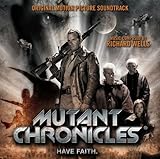
 I remember when I first heard about this film, well not exactly, but it was probably about a year ago. The title struck me as something I wanted to see, I mean its called Mutant Chronicles, how can any science fiction fan say that doesn't pique their interest? If they do, they are probably lying. Anyway, I was hoping to get a chance to see this on the big screen, I wasn't expecting a terribly wide release, but thought it would come somewhere near my area. I was wrong. The movie played in exactly two theaters for exactly seven days. What? Seriously, that is absolutely ridiculous. The cast has Thomas Jane (Punisher), Ron Perlman (Hellboy), and John Malokovich (Burn After Reading), plus the trailer gives the vibe of being a decent enough movie to pull in some money either early in the year, or possibly during the September slow down. I am not saying it would be a blockbuster, but it looks like no one had any faith in it. Perhaps it is just a bad movie.
The DVD does not arrive until August, so until then I will have to make do with the score. Composed by Richard Wells, the Mutant Chronicles music is big, bombastic, heroic, and militaristic. In short, it is a solid score that will get in your head with its strong thematic and melodic cues that will allow your mind to create its own science fiction war on the giant movie screen of the mind. Of course, it helps only having the title to go on. Not having seen the film, it is hard to judge how well it works within context. Fortunately, a good score will not be limited to being seen in conjunction with the film it was written for, but will transcend it and enable a listener to create their own visuals for the music. Not that a good score cannot merely play well with the film, but I think you know what I mean.
Richard Wells is a name I cannot say I have encountered before. I have come to discover that he is a relative newcomer with only a few credits to his name. Wells most notable works include a pair of videogames (Gangsters and its sequel), the score for the UK release of Ong Bak, and the horror/sci-fi/comedy Evil Aliens. I have not heard any of these scores, although I am aware of Evil Aliens, it is one of those movies I have wanted to get around to checking out.
The score for Mutant Chronicles does not break any new ground, nor does it try to. What it does do is create a solid listening experience that is alternately heroic and powerful, and dark and foreboding. It is a score that is easy to press play on and proceed to get utterly lost in it. It is not going to blow you away with ingenuity and creativity, but there is something about that is rather engrossing.
As I listen to this score, I imagine picking up a plasma rifle and heading out to wage war with evil creatures led by dark forces intent on my destruction. Of course, the music leads me to victory as I navigate the darkened, debris strewn streets and alleys, making my way deep into enemy territory and achieving ultimate victory. Conversely, I can also just sit there and enjoy what Wells has created.
The score begins with "Take Off," which does exactly that. This cue is upbeat and draws you right away with the military march percussion and strings with a triumphant horn line playing over it. I love this track, it is the kind of music that is inspiring in the face of certain danger.
Next is "The Night Before," which brings everything down a notch and offers a more contemplative tone as our soldiers prepare for what is to come, their final moments calm. It is short-lived as it gives way the dread and tension of "Mutant Attack." This breaks the calm and puts a hold on the heroics as there is a battle to be had.
Richard Wells does a good job of keeping the music varied and interesting, while also mixing in recurring themes, most notably the heroic theme introduced in the opening track. Considering I have not seen the movie, this is a very effective score that brings a grandiose, epic feel to what I hope is an entertaining film. It also makes me interested in seeing, er, hearing what else Wells will bring to the table in future work.
Recommended.
July 5, 2009
CD Review: Transformers - Revenge of the Fallen the Score - Composed by Steve Jablonsky
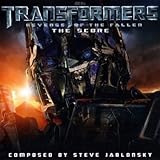
 In 2007 Michael Bay brought the 1980's series Transformers to the big screen in vivid, metal crunching fashion. The story was somewhat lacking, there was stupid comedy, and some bad acting, but it was still an exciting film. One of the positive things I took away from the film was the score by Steve Jablonsky. It was big, bombastic, and sounded very good. I remember checking store shelves for it and did not find it, I checked online and did not find it. What's the deal? It is a big release, it should have a score album, right? It turns out there were no initial plans and it took an online position to show the powers-that-be that a market did exist. It came out in the Fall of that year, and it turned out to be a great album. Fortunately, with the release of the second film, they chose not to wait four months to release it. The question is now whether or not it is any good.
The score, was composed by Steve Jablonsky and marks the third direct collaboration between Jablonsky and Michael Bay, beginning with The Island. He has also developed a relationship with Bay's production company, Platinum Dunes, having scored the remakes of The Texas Chainsaw Massacre (and its prequel), Amityville Horror, The Hitcher, and Friday the 13th. I have not heard those separately, but do not recall the scores as standing out that much, unlike his Transformers work, not to mention The Island. Jablonsky definitely knows how to step up for the big effects films and deliver the goods in the form of eminently listenable scores that work well even apart from their films.
This new score is not quite as strong as the original, but I think that would have been a tall order under any set of circumstances. That is not to say it doesn't deliver, it does, I just get the feeling that the original themes could have been used to stronger effect, as I only really noticed the Autobots theme used. That is not to say the new material is bad, just not quite as I had hoped.
We open in similar fashion to the first score, in heroic fashion. The first cue is called "Prime" and it is a slow burn sort of track that brings us back into the Autobot fold and prepares us for the return of the transforming heroes. It is followed by a weaker cue in "Einstein Was Wrong," which brings Sam Witiwicky into the story as he has his mental meltdown brought on by a shard from the All Spark left over from the first movie.
Track three features the collaboration of Jablonsky and Linkin Park on an instrumental version of "New Divide" (featured on the soundtrack album). This version is called "Nest" and it is a strong techno/rock/industrial cue that is big and heroic and fits the film nicely, and plays better than the original version. This is a cue I would have liked to have heard a little bit more of throughout.
Next up is "The Shard," this piece brings in a little darkness and, dare I say, tension to the mix. It then moves from darkness and tension straight into evil with "The Fallen," which is used to introduce us to this franchises version of Star Wars' Emperor. It is a slow cue that will definitely give you pause.
The flow continues as we move from tension, to evil, and now onto the epic. "Infinite White" with it' synth, strings, and soaring female vocals it is simultaneously soothing and foreboding. We need not wait long to discover what the bad guys have in store as we slip from the soothing into another cue dripping with dread in "Heed Our Warning" and leads into a very dark mid-section that runs through "The Fallen's Arrival" and "Tomb of the Primes."
The action ratchets up as we hit "Forest Battle." This plays with one of the bigger action pieces of the film and leads into a more upbeat and hopeful tone, with its use of the Autobots theme from the first film. It also brings us closer to the cue of hope that is "Matrix of Leadership."
Everything builds up the action packed finale "I Rise, You Fall." this plays with the Egypt battle and plays off the earlier evil as we get the heroic Autobot theme reigning triumphant.
Overall, this is a very good score that fans will want to have in their collection. Granted, I am still more likely to reach for the original (same goes for the movies), but there is no denying that the score is one of the high points of the movie and Steve Jablonsky continues to impress with his big movie scores.
As good as it is, it does seem to run short. We get 44-minutes of score from a movie that is nearly 2.5-hours long. There have to be missing cues here. It is the reverse situation of the soundtrack release, which had songs that were not in the film, in this case I suspect we are missing chunks of music that may have helped smooth this out, as it does jump around a bit.
Bottomline. You will not be disappointed. Of the two music releases for this film, this is definitely the one to get. This is a big score that bears no pretense of subtlety, it is exactly what you want from a score for a film whose stars are giant alien roots.
Highly Recommended.

June 13, 2009
CD Review: Caprica - Music Composed by Bear McCreary
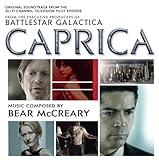
 In recent years, there has been one composer that has risen faster to the top than any other, that man is Bear McCreary. The man can flat out compose music. Yes, I realize that reads a little silly, but the man is so enormously talented that the sky is the limit for what he will be able to accomplish in his career. His work for Caprica is just another example of the magic he works over the notes. It is music that is compelling, exciting, mournful, and definitely original.
I first discovered his work when he took over for his mentor. Richard Gibbs, as composer for Battlestar Galactica. His work on that series has taken science fiction scoring and the art of television scoring to an entirely new level. If he were scoring features, we'd probably be saying he is taking film scoring to the next level, so it is not that I need to qualify him as a "television composer," the man is an artist. He brings together so many different elements that the final product sounds completely original.
His Battlestar Galactica scores bring together traditional orchestral sounds, strong percussion, ethnic woodwinds, and a myriad other sounds into an utterly beautiful tapestry. In addition to the epic nature of this work, he has shown versatility across the television landscape, having scored Terminator: The Sarah Connor Chronicles and Eureka, each demonstrating another aspect of his talent. Going a step further, McCreary has also lent his skills to direct to video films such as the Rest Stop series and Wrong Turn 2: Dead Ahead. Those films even further demonstrate his ability to take mediocre material and pair it with superior music, just witness the Southern rock in hell atmosphere he creates for Rest Stop 2: Don't Look Back.
That brings me to Bear's score for the pilot episode of Caprica, the Battlestar Galactica prequel. The feature length pilot has arrived on DVD and will make its television debut when the series arrives in early 2010. I am almost embarrassed to say that I have not yet seen the pilot and hope to rectify that in the near future. Fortunately, it does not dampen my enthusiasm for this music, it just means my context will be put straight.
Caprica takes place on Caprica 58-years prior to the fall of the Colonies. It centers on two families, the Graysons and the Adamas, entwined by tragedy and the creation of the Cylon. It is science fiction series, but, from what I have seen, falls more to the dramatic side of the coin. And with a different look at the BSG universe comes a different sound to the score.
Bear McCreary's score is more heavily weighted to the orchestral side, immediately giving us a different look at the world. While stings dominate the score, there are still a few passages that give way to BSG-like percussive cues, most likely accompanying scenes with Cylon involvement. Overall, it is a beautiful, haunting score that will ultimately reward me more when I see the accompanying visuals
The album opens with "The Graystone Family." It is a dramatic, eerie cue led by strings, welcoming you into this new world. It simultaneously tells you that this is not Battlestar Galactica and that what you are about to see is serious business. It is followed by a cue that reminds you this is still a Battlestar Galactica world with its use of percussion alongside the strings, it is called "Terrorism on the Lev."
"Grieving" is a somber cue that is haunting, beautiful, and speaks of a great and tragic loss. It is subtle, but one of the more beautiful cues on the album. It is followed by another subtle cue, only this time it is not loss, but foreboding dread. "Lacey and Zoe-A" is an interesting piece that strikes me as a cue intended to build a relationship, but also point towards danger ahead.
Four tracks in and four different feels. Everything works together in perfect concert as a complete whole, but you are taken on a ride. I never cease to be amazed by his ability draw me in and hold my attention. I am very interested to see what he could do on the big screen, you have to know it is going to come sooner or later, much like another rising star: Michael Giacchino (who came to my attention with his work on Alias and Lost).
Bottomline. I could continue on down the list of cues on the album, but where is the fun in that? Let me just say that his work is wonderful. He covers the range of emotion, he is not hampered by adhering to any expected style, and knows when to cut loose and when to reign it in. Even if you are not interested in the show but have a love for scores, this is one you will want for your collection.
Highly Recommended.
May 23, 2009
CD Review: Crank - High Voltage, Original Motion Picture Soundtrack
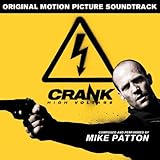
 Mike Patton is one interesting character, and one who has been making more and more in roads into the film world. Or course, he is bringing his musical mastery along with him. Actually, that should probably be more his mastery of sound rather than music, as his talents seem to involve anything that makes sounds or noise. Since the dissolution of Faith No More many years ago, excepting their upcoming reunion shows in Europe, Patton has done nothing but keep bus. He brought his old band Mr. Bungle back for a while, and worked on new projects such as Tomahawk, Fantomas, Peeping Tom, and Mondo Cane, along with countless others. Well, a couple of years ago saw his focus broaden somewhat, bringing the world of film into focus.
In 2007, Mike Patton lent his vocal talents to the film I Am Legend, giving a voice to the zombie/vampire creatures. That same year, he also provided voices for a couple of video games, The Darkness and Portal. He would return to video games again in 2008 working on Left for Dead. 2009 has him turning back to the big screen as the voice of Mixmaster in Transformers: Revenge of the Fallen.
That certainly is a lot of voice work! Fortunately, that is not all he has done. Earlier this year Jason Statham returned to the big screen as Chev Chelios in Crank: High Voltage, the unlikely sequel to the live action cartoon that was Crank. Along with him, Mike Patton came on board to provide the score, taking over for Paul Haslinger, who returned to the Underworld series. This score follows the first film scoring work he did on last year's short A Secret Place.
It is definitely an interesting piece of work. Patton never seems to go about anything with what would at least appear to be a normal approach, everything is attacked from askew. This is a good thing, it allows us a bit more creativity and allow artists to escape the norm and try to break through boundaries of what is normally considered acceptable.
Patton's score for High Voltage is not your standard strings and brass, orchestral score, oh no. Something tells me the orchestra route will be the road less traveled for this particular artist. His work here comes across as something of a cross between a score and a soundtrack. There is a theme that recurs throughout, first appearing in the second track, "Chelios"; however, that is the exception and not the rule. Patton bounces around a variety of approaches based on the needs of the scene.
That said, the score encompasses industrial metal, heavy electronica, world music, and techno as it drills itself into your head. It comes across as schizophrenic as the movie does, always jumping to and fro, never settling in any one area for too long.
Something that is interesting about this album, and scores in general, is that when they are one well, they become more than just background sounds to a film. This becomes a good test for the quality of a score. If it does not work standalone, it is not a good score, it may work for the movie, but a good score does more than that. A good score can take you back to specific scenes and events in the movie. Beyond that, the good ones can transport you to other places in your mind, they can spur your imagination to create new visuals to accompany them. Patton's work here is one of those transporting scores. It is far from my favorite, but it is terribly effective and stands apart from many other scores out there.
Mike Patton performed all of he instruments and did all of the programing for the album. Quite a feat, all adding to his accomplishment. So, when you give this a listen, marvel at his work and be sure to check out such standouts as "Chelios," "Chickenscratch," "Tourettes Romance," "El Huron," "Chevzilla," "Triad Limo," "Pixelvision," and "Epilogue - In My Dreams."
Recommended.
February 11, 2009
CD Review: Batman - Gotham Knight, Music Composed by Christopher Drake, Robert J. Kral, and Kevin Manthei
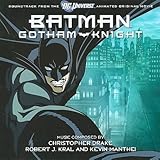
 In 2005 Batman made his triumphant return to the big screen. It was the first attempt at translating the Caped Crusader to the screen since 1997's debacle known as Batman and Robin (the less said the better). The new film, Batman Begins, successfully reimagined the character for the big screen and it's popular and critical acclaim all but assured that a sequel would be made. That sequel came earlier this year as the even more critically acclaimed and even more popular The Dark Knight. In the hype build up to its release in July, DC released a collection of loosely connected shorts on store shelves, it is called Batman: Gotham Knight.
The release can be equated to the The Animatrix release during the run of the Matrix series. It is a collaboration of Japanese and American creators telling stories of the Batman in the time between Batman Begins and The Dark Knight. The first film saw Bruce Wayne first take up the mantle of the Bat and begin his crime fighting career while the new film sees a more seasoned crime fighter still struggling with what he has to do, but more confident in it. Gotham Knight attempts to chronicle the characters growth and his popular reception in the time between.
Those involved include writers Josh Olsen (A History of Violence), David S. Goyer (Batman Begins, Blade), and Alan Burnett (Batman: Mask of the Phantasm). Bringing their unique artistic visions to the project include Toshiyuki Kubooka (Wings of Honmaise), Hiroshi Morioka (Tsubasa Chronicle), and Yasuhiro Aoki (The Animatrix).
However, to help give it an even more distinct and cinematic feel, the producers reached out to a trio of composers to lend their talents to the project. The three took on the separate stories, helping give them an even more individual feel. Their work adds much to the final project, although I find the standalone experience of listening to the album a little underwhelming.
The three composers are Christopher Drake (Hellboy Animated), Robert J. Kral (Angel, Duck Dodgers, Dresden Files, Superman: Doomsday), and Kevin Manthei (Justice League: New Frontier, Invader ZIM). All three have done fine work on the full length projects and all three do good work here, just in a more abbreviated form.
I think the idea of multiple composers handling the individual stories is a very good one. It does work towards the individuality that each story strives to possess. The problem is that through the individuality there is still a part that needs to fit into the bigger picture. The stories themselves work together, but the break up of the composing duties does not foster the necessary continuity to bring the whole thing together.
The funny thing is that this issue of continuity never crossed my mind when I watched the feature. The stories flowed by, always holding my attention as well as giving an interesting look into the Batman. The opening story initially hooked me due to the presentation, a group of young skater kids telling stories of their Batman sightings, told in a "my story is better than your story" progression of one-upsmanship.
The initial segment, "Have I Got A Story For You," is composed by Christopher Drake. It gets off to a slow start with the improbably titled "Main Titles / Intro / Interlude / Punk Skater / Trouble At The Dock." All of those themes are crammed into two and a half minutes, as soon as one theme takes hold the next takes over. It evens out over the next few as it provides some stirring action-oriented music for each story.
Next up is Kevin Manthei for "Crossfire." Manthei injects some interesting electronic samples and sounds into his moody cues. These have to rank near the top for best cues of the album, there is something terribly atmospheric and eerie and them.
Robert J. Kral is up with "New Device," the story of Bruce testing a new shield to protect him from gunfire. Kral's work brings elements of wonder and dread to the table, reminiscent of Danny Elfman's work on the 1989 Batman. It is one that is good, does the job, but coasts on the familiarity of big orchestration.
For "In Darkness Dwells" Christopher Drake returns for a story that has our hero in the sewers tracking Killer Croc and featuring an appearance by Scarecrow. The music here brings to mind feelings of the sewer. Not really dirty, but suspenseful and eerie with a hero who is unsure what lay around the next corner. Nice and foreboding segment.
Kevin Manthei handles "Working Through Pain," featuring a wounded Batman fighting through his pain paired with flashbacks to training in the Far East. Manthei brings some great flavors to this tale. There is a sad haunting feel that permeates the composition, blended with Eastern instruments and arrangements. Manthei really is a good composer, I look forward to future full-length scores from him.
The final story features Robert J. Kral and is called "Deadshot." This tells the story of an assassin with a cybernetic eye and a Batman delivering one-liners, a bit odd to be sure, but still entertaining. The music has a very epic feel to it following a haunting piano opening. There thrills and eerie atmosphere throughout this final story. Kral injects a safe, familiar feel to the score, much like his contribution to "New Device."
The final credits track is a nice conclusion to the album. It is driven by galloping strings that sound very "Batman" and are supported by violin and brass. It brings closure in epic fashion to all that we have just witnessed.
Bottomline. Overall, this is a decent album that is held back by the brevity of each chapter. At times it felt like there were bigger pieces fighting to get out but were held back by the confines of the format. It works better in the context of the feature but is definitely worth the time for those of you who like film scores apart from the films. There certainly are some high points to pull out.
Mildly Recommended.

Track/Cue List:
Christopher Drake:
1. Main Titles / Intro / Interlude / Punk Skater / Trouble At The Dock (2:28)
2. Living Shadow / Living Shadow Finale (1:45)
3. Skater Girl / Trouble In the City (0:50)
4. Batmonster Appears / Batmonster Do-Over / Batmonster Finale (2:18)
5. Rooftop Robbery / Robobat (1:44)
6. Have I Got A Story For You Finale (1:35)
Kevin Manthei:
7. Crossfire (4:49)
8. Inferno (5:48)
Robert J. Kral:
9. New Device (1:22)
10. Trigger A Device / As Good As Your Drive (1:10)
11. A Russian In His Grave / It Works Too Well (3:53)
Christopher Drake:
12. In Darkness Dwells Intro (1:00)
13. Gordon's Cannibal / Ghost Station (3:00)
14. Epidermolytic Hyperkeratosis (0:43)
15. Killer Croc / Hallucinations / Scarecrow Interrupted (3:19)
16. Escape And End (1:45)
Kevin Manthei:
17. Working Through Pain / The Fall (1:46)
18. Bazaar (0:26)
19. There Is Another / Training (2:46)
20. Rejected And Despised (1:30)
21. Painless Fight/ I Can?t (3:23)
Robert J. Kral:
22. Parents Killed (0:54)
23. Gun Attraction / Park Killing (1:26)
24. Gordon / Batman / The Train (6:14)
25. His Life's Quest (0:56)
26. End Credits Suite (5:02)
November 28, 2008
CD Review: Rest Stop - Don't Look Back, Music Composed by Bear McCreary
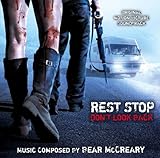
 If you could only keep your eye on one up and coming composer, I highly recommend that you choose wisely. Everywhere you turn there is another film with another new composer hoping to write the next great score. Well, maybe not everywhere, and they probably just want to do what is best for the film they are working on at the time, but I think you know what I am getting at. Now while you contemplate which composer you would choose, allow me to tell you who you should choose, should you choose to participate. You should choose Bear McCreary, no doubt about it.
Bear has been composing scores since 1998, but it was when he began working on the reinvention of Battlestar Galactica in 2004 that people began to sit and take notice. Also, when I say "people," I specifically mean me. Simply put, the man is taking composing in new, interesting, and highly compelling directions. He integrates all manner of world music, sounds, instruments, voices, and more into music that melds perfectly with whatever material he is working on yet remains highly listenable when taken separately.
 In addition to Battlestar Galactica the late Elmer Bernstein (Oscar winner for Thoroughly Modern Millie) protege has also worked on Eureka, Terminator: The Sarah Connor Chronicles, and Wrong Turn 2: Dead End. The man works hard, creating fascinating work for strong shows as well as projects that may not be worthy of his level of creativity, like Rest Stop: Don't Look Back, but we knew that when he scored the original Rest Stop movie.
Rest Stop: Don't Look Back is very much a retread of the prior film, covering much of the same ground, not answering any f the questions that viewers (again, meaning me) want answered. Anyway, long story short, the brother of the male lead in Rest Stop is home on leave from Iraq. The soldier heads off with his girlfriend and third wheel in tow to search for the missing couple from the first film.
The trio wind up at the same rest stop, menaced by the mysterious man in the yellow truck, and coming face to face with the weird family in the RV. They fight for their lives against these odd characters who may or may not be real. We get glimpses as to how the driver came to e who he is, although the question "why?" still has not been answered. It is a movie with some intriguing ideas and contain a few well-shot sequences but it is not what anyone could truly call a good movie.
That brings me to the work of Bear McCreary. His score far outshines the rest of the film as it presents something unique in sound, creative in execution, and devoid of typical horror movie score moments. That is to say the Rest Stop sequel's score avoids the screeching moments where everyone is expected to jump on cue as well as the typical slow build of quiet strings to a build the suspense up to the screech moment. Don't get me wrong, some of those scores are quite good and effective, but it is the expected path and Bear does not go down the expected path.
The score for this movie is a lush composition built on electric bass, de-tuned banjos, fiddles, and an overall Southern rock in hell atmosphere. It has an off-kilter approach that sounds fresh and keeps you wondering just where he might be going, it is quite unlike anything I have heard before. Listening to this makes me want to hear what he could have done on something like Rob Zombies The Devil's Rejects, basically, take this sort of approach with a good film.
Here is an interesting quote from Bear in an interview with iF Magazine: "They (cliches) were easy to avoid because I loathe contemporary horror scores. When I was hired on for both REST STOP films I made it clear early on that I had no interest in doing the cliched "orchestral-screaming" score, the kind of Ligeti / Penderecki rip-offs that dominate almost every horror film out there. The instrumentation for both REST STOP films is pretty unique, basically a blue-grass band. I knew I had to raise the musical stakes this time around and incorporated a full rhythm section. The sound I was going for was "Lynrd Skynrd Trapped in Hell." I don't know if that's where I ended up, but it was my starting point.
That sounds just about right, don't you think? This is what makes him such an intriguing new voice. He knows just how to approach a project, create something new, and push the boundaries of what is typically accepted for the genres he is working in.
In addition to the score, Rest Stop: Don't Look Back also includes a couple of original songs of Bear's creation. The first song is the opening credits track called "Rattlesnake on the Highway." It is a Southern rock song that is all right, but not as good as later songs here. The other tune from this film is "Jesus, He Forgives You Too," combined with the final track on the CD, "Down Home Salvation," which appeared in the first film, are a couple of traditional bluegrass spirituals with completely demented lyrics, which were a collaboration with the Rev. Bufurd "Buck" Davis. Not great songs, but definitely entertaining to actually listen to.
The album includes a few bonus tracks of music from the first film, including "Down Home Salvation." This comprises a few score cues as well as a couple more songs and includes "All That Remains," as sung by Raya Yarbough, that has also featured on Battlestar Galactica.
Bottomline. Even if you don't like the movie from which it came, I know I'm not, do not let that stop you from diving into this wonderful score. Bear McCreary is a name that I am definitely going to keep on eye on for future work, he is a wonderful young talent with many years of great scoring ahead of him.
Recommended.
Track List:
1. Rattlesnake on the Highway 4:25
music and lyrics by Bear McCreary
performed by Brendan McCreary
2. Roadside Assistance 1:26
3. Main Title 0:43
4. Tom and Marilyn 4:07
5. Cleansing the Sinner 1:52
6. Jesus, He Forgives You Too 3:10
music and lyrics by Bear McCreary
performed by the Rev. Buford “Buck” Davis
and His Minstrel Singers
7. Creepy Gas Station 3:45
8. Marilyn’s Blues 3:27
9. On The Bus 2:30
10. Nicole’s Ghost 2:21
11. Powertools 3:43
12. Tom to the Rescue 2:11
13. The Last Stand 5:05
14. The Driver Gets Marilyn 1:46
Bonus tracks from Rest Stop:
15. All That Remains 4:18
music and lyrics by Bear McCreary
performed by Raya Yarbrough
16. Lonely Woman 3:47
music and lyrics by Bear McCreary
performed by Brendan McCreary
17. Trapped 4:25
18. Gravely Mistaken Identity 3:06
19. Nicole Fights Back 2:20
20. Down Home Salvation 5:39
music and lyrics by Bear McCreary
performed by the Rev. Buford “Buck” Davis
and His Minstrel Singers
TOTAL TIME: 64:38
August 14, 2008
CD Review: The Midnight Meat Train Original Motion Picture Score, Music by Robert Williamson & Johannes Kobilke

 Last Fall I saw a trailer for this weird looking horror movie. I saw Bradley Cooper, Vinnie Jones, and even Brooke Shields. The trailer made this movie look uber-creepy, dark, and violent. Then the title appeared: The Midnight Meat Train, complete with that spooky trailer voice. The title made me chuckle, but in a good way. I did not see the trailer again until January, with Rambo I believe. I have to say that I was really looking forward to seeing this movie. Considering when I was seeing the trailer, it appeared that it was heading towards a wide release. Now, it does not look like that is going to happen. I will just have to wait for a DVD release, and imagine what it will look like while listening to this score.
The movie has more going for it than just a cool trailer and Brooke Shields (has she done horror before?). The biggest thing is probably the fact it is based on a short story (from Books of Blood) by Clive Barker, and if there is one thing we know, it's that Barker can write horror. It is also the English language debut for Japanese director Ryuhei Kitamura, director of such films as Versus, Azumi, Alive, Sky High and Godzilla: Final Wars. The guy has a distinct look to his films and I am looking forward to seeing how he does here. However, it seems Lionsgate has not seen the strengths and pretty much killed the promotion and dumped it into budget theaters. Why? Who knows, but from what little I have seen, it is easy to see it deserves better.
Now, if I had known who the composers were, I would possibly have mentioned them among the things that the movie has going for it. I couldn't because I have never heard of Robert Williamson or Johannes Kobilke. After doing a little looking into their filmographies, I could not find anything I had seen before. Well, nothing except for Crank, which Williamson worked on, contributing "additional score programming." I did find The Midnight Meat Train is not the first time these two have worked together. They previously scored the horror/thriller Pathology (another film that was dumped into theaters for a terribly brief run).
I like this score. This duo steps away from the use of traditional orchestral elements in favor a variety of synth flavors. It is a rather sedate score that does not follow the usual build in volume as tension increases. Yes, there are portions where the volume increases, but it isn't the same. This score is in stark contrast to another horror score I recently listened to, Mirrors by Javier Navarrete, which employs an orchestra and has that recognizable flow from mellow elements to build an aura of tension that increases in volume and complexity as tension is increased.
The score does a strong job of creating an atmosphere of dread, with moments of quiet reflection as it builds to a frenetic pace later on. The music is engrossing and even works outside the confines of the film (mainly because I like it and have not yet seen the film). I like the fact that is is not orchestral based, this allows it to venture in different directions using sounds that would be out of place in a traditional score.
I found it very easy to just sink into the aura created early on in the album. I can imagine listening to this in a dark room and being completely creeped out. Yes, it is that kind of score.
Among my favorite cues are: "Leon and Maya," "I Love You - Taking Photos," "Retrieving the Camera," and "Im Untergrund."
Bottomline. From start to finish, Williamson and Kobilke have crafted an engrossing score that encompasses sensitive moments as well as out and out fright inducing tones. This is well worth spending a dark evening with.
Recommended.
August 13, 2008
CD Review: Mirrors Original Motion Picture Score, Music by Javier Navarrete

 Prior to 2007 I had never heard of film composer Javier Navarrete. Of course, he is only one of many whose names I do not know. However, it is a name that came to my attention with my viewing of Pan's Labyrinth, the beautiful masterpiece from director Guillermo Del Toro. That film is an absolute work of beauty, and if you have not seen it, what are you waiting for? One of the elements that helped make the film work as well as it does is the masterful score composed by Navarrete. So, when I saw that he provided the score for Mirrors, I knew I had to have a taste. I mean, it it is half as good as Pan's Labyrinth, it is bound to be worth listening to, right?
Going into my listening of this score, I have not yet seen Mirrors, so I cannot say just how well it works. That said, I had hopes for the music, although I was sure to keep my expectations in check as it was surely not going to rise to those prior heights. This is nothing against Javier, it is just that the material, from what I have gleaned from the trailers just does not rise to the fantasy driven heights of Pan's Labyrinth.
All right, enough about Pan's Labyrinth (see the movie, get the score, you won't be disappointed).
For those of you who do not know what Mirrors is about, let's give a little background information. The film tells the story of an ex-cop, played by Kiefer Sutherland, who is currently working as a security guard in a burned out department store that is in the process of being rebuilt. While on the job, he discovers an evil force that manifests itself in the mirrors (duh!) and poses a deadly threat to him, his family, and his friends. Can he stop the evil in time?
On the surface, the film bears a striking resemblance to any number of J-horror remakes, which is a strike against the film considering how "good" those have been of late. What makes it worth checking out, at least for me, is the fact that Alexandre Aja is at the helm. He is the man behind Haute Tension and The Hills Have Eyes remake, plus the writer of the underrated P2. The man certainly makes compelling horror, hopefully this will keep up the trend.
Javier Navarrete is another name that makes me want to see the film, and after listening to this score album, I have good hopes that I will like it. The music is quite good. It is nothing particularly groundbreaking for a horror score, but it has plenty of flavor that will keep you interested. The album has a flow that is exactly what you would expect from this type of work. There are the low, menacing portions, followed by a build in volume and speed as the tension builds.
What I really like about Navarrete's composition here is the way he makes everything feel epic. The music has a large expansive feel. It is epic in a different way than the Pan's score, where that one had the fantasy element, this film (again, based on the limited footage I have seen) is more claustrophobic as the evil force closes in. Navarrete's music takes that claustrophobic feeling, and sets it to music that sounds closed in, yet has a quality that expands the field as it closes in.
The score brings in a lot of different elements, using strings, percussion, vocal, and other elements I could not readily identify to create a varied stage that follows the expected pattern, yet never bores.
Among the cues included here, my favorites include the menacing "First Night," the piano driver "Esseker," the dramatic "What Do You Want From Me?," "Extending Mirrors," and "Escape."
Bottomline. This is not a great score, but it is a very good one. Even without the film as a frame of reference, the music builds tension very effectively. Javier Navarrete is an interesting musical voice, and this shows a different side than his last high profile work. Definitely worth looking into for score fans.
Recommended.
June 6, 2008
CD Review: Indiana Jones and the Kingdom of the Crystal Skull - Original Motion Picture Soundtrack

 It was more than thirty years ago that composer John Williams etched his name into history. He was there when Steven Spielberg single-handedly created the summer blockbuster, that blockbuster film was Jaws. Since that summer of 1975 movies have never been the same. Each year since studios have competed with each other to deliver the biggest thrills, chills, and spills to an ever-waiting audience. One element that is always there, hand in hand with the film is a big score. Some of them are memorable, but many are not. It seems that some of the greatest blockbuster films are accompanied by the work of John Williams.
Between 1975 and 1982 John Williams brought us Jaws, Star Wars, Close Encounters of the Third Kind, Superman, Raiders of the Lost Ark, and E.T. the Extraterrestrial. Six of the all time great scores. I do not have the greatest knowledge of film composers, but Williams name will forever be etched in my mind for these fantastic works. This doesn't even mention his work on sequels like The Empire Strikes Back and Indiana Jones and the Temple of Doom, or his more recent work in the Harry Potter series, War of the Worlds, or Memoirs of a Geisha. Wherever his name is found, great music is sure to follow.
In past decade George Lucas and Steven Spielberg have revisited some of those early blockbusters, in doing so, they have reignited our thirst to here the classic themes again. It began in 1999 with Star Wars: Episode I - The Phantom Menace (and the two subsequent Star Wars films) and continues now with the return of Indiana Jones in Indiana Jones and the Kingdom of the Crystal Skull. Revisiting these characters and themes creates an interesting issue, one which seems to weigh heavy on this soundtrack.
The issue was apparent in the Phantom Menace score, but improved with each successive film concluding with the "best of the prequels" score for Revenge of the Sith. Now, with Kingdom of the Crystal Skull the problem of revisiting the original themes while updating them and adding new material for the new film rears its ugly head.
On one hand, hearing the classic "Raiders March" is fantastic, hearing those immediately recognizable notes either with the film or on this CD is a pure geek moment (similar to the one I had two years back when Williams' Superman theme was use in Superman Returns). However, there is something that feels just a little bit flat in its execution, an issue that spreads across the disk.
To my ears, the score, while definitely entertaining, falls a little flat. It does not sound as full and lush as I would like it to be. I am not sure if it is a result of disinterest, or just not finding the write notes, or possibly with the orchestra employed to perform it, but it comes across as just a little bit off.
The score falls prey to the same reaction I had to the film: I like it but do not love it the way I wanted to love it. I was so looking forward to this film, and while it was definitely fun and entertaining, it did not quote fly to the heights that I had hoped it would. John Williams score is the same way. "Raiders March" and "Finale" (which brings together all of the themes) are fun pieces, but they lack the punch that they should have.
Without going to far down the negative path, let me just say that I enjoy this score, I just want to get my hands on the original trilogy scores as this definitely is lacking something.
I already mentioned the "Raiders March" and "Finale," but they are not the only tracks of interest. "Call of the Crystal" offers up some eerie atmosphere that would seem at home in a 1950's era sci-fi film and "Irina's Theme" delivers some darkness and menace. More often than not, this is a fun score, an easy listen and one that does have replay value, much the same way as the movie from which it came.
Bottomline. If you like the movie or John Williams, you will want to pick this up. The disk is chock full of musical goodness. The pure entertainment value far outweighs what really are minor negatives.
Recommended.
Track List:
01. Raiders March 5:06
02. Call of the Crystal 3:50
03. The Adventures of Mutt 3:12
04. Irina's Theme 2:26
05. The Snake Pit 3:15
06. The Spell of the Skull 4:24
07. The Journey to Akator 3:08
08. A Whirl Through Academe 3:34
09. "Return" 3:12
10. The Jungle Chase 4:23
11. Orellana's Cradle 4:22
12. Grave Robbers 2:29
13. Hidden Treasure and The City of Gold 5:14
14. Secret Doors and Scorpions 2:17
15. Oxley's Dilemma 4:46
16. Ants! 4:14
17. Temple Ruins and The Secret Revealed 5:51
18. The Departure 2:27
19. Finale 9:20
Total Album Time: 77:30
Subscribe to:
Posts (Atom)